
Follow the materials through the line
Metal finishing uses water, process chemicals, energy and consumables to create a controlled surface. A useful environmental review begins by tracing where those inputs go. Some metal becomes part of the coated product, some remains in the bath, and small quantities can be carried into rinses on parts and fixtures.
A process map should include cleaning, activation, coating, rinsing, drying and periodic maintenance. Include occasional events such as a bath dump, cleaning of a tank, leaks and the replacement of filters. Looking only at a normal shift can conceal a large share of the material the site must manage.
Reduce carryover and rinse demand
Drag-out is the solution carried from one tank on parts, racks, barrels or other equipment. Pockets, blind holes and horizontal ledges can hold far more liquid than an openly draining face. Positioning and handling parts so they drain effectively may lower losses without changing the finish chemistry.
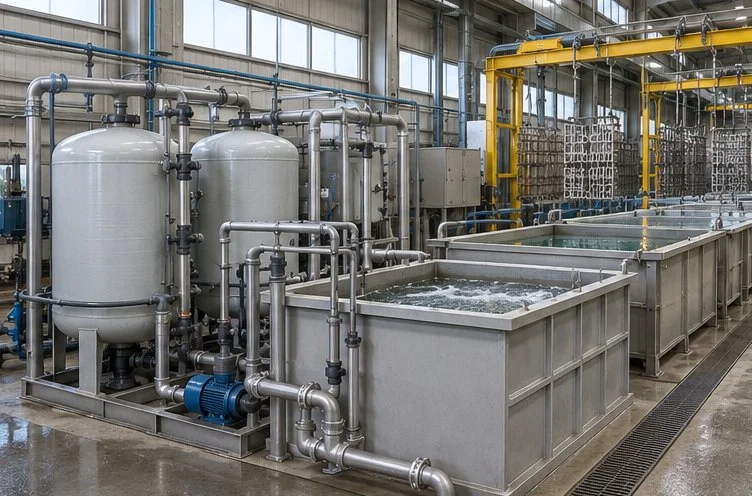
Rinse design can reduce fresh water use while maintaining the cleanliness needed for the next stage. In a countercurrent arrangement, cleaner water enters at the final rinse and flows toward earlier, more contaminated stages. Evaluate the system with representative loads, since a concentrated pocket carried by a difficult part can overwhelm a rinse that looks satisfactory on average.
Reducing water use can increase the concentration of pollutants in some streams even as total discharge volume falls. Monitor both concentration and overall load where relevant, and verify that quality remains acceptable after changes. A lower water reading alone says little about chemical losses or the treatment needed downstream.
Evaluate recovery and treatment
Segregating streams can keep useful materials recoverable and avoid combinations that complicate treatment. Concentrated drag-out, cleaner rinses, spent solutions and equipment washdown have different characteristics. Decisions about reuse or treatment should begin with actual stream composition and with compatibility reviewed by qualified personnel.
Depending on the stream, a plant may use approaches such as ion exchange, membrane separation or evaporation to recover water or concentrate materials. Each creates secondary streams or residues and has maintenance or energy demands. Evaluate where the concentrate ends up and whether recovered water is suitable for the rinse or other step it will feed.
Treatment can transfer metals from liquid to the solids generated by the process. Keep track of the amount and destination of solids along with wastewater indicators. A project that reduces a discharge metric should be assessed against the workers, equipment, energy and waste handling involved in the complete change.
Consider the workplace and life of the part
Chemical substitution can change hazards, process capability and the performance of the finished component. Assess the materials used, the exposure routes and the qualification required for the product. A candidate process may lower one risk while introducing a new waste stream or reducing the durability that justified the original coating.
Ventilation, containment and work practices matter where processes generate mist or where chemicals are transferred. The OSHA electroplating guidance for hexavalent chromium illustrates how an exposure assessment and engineering controls relate to a specific plating hazard. Other processes require assessment of their own chemistry and operations.
Finish durability also affects environmental decisions. A finish that supports repair or avoids early replacement can change the amount of material and energy used over a component's working life. Corrosion resistance helps identify whether extended life is plausible under the actual service conditions.
Measure changes and check applicable requirements
Useful operating measures can include rinse-water volume, chemical additions, rejected work, waste generated and energy used per unit of good output. Document the type of parts and loading pattern when creating a baseline. Comparing a month dominated by small parts with a month dominated by large recessed parts can otherwise make the same process appear to improve or deteriorate.
In the United States, the EPA metal finishing effluent guidelines and the related electroplating guidance describe the regulatory framework for covered operations. Applicability depends on the activities and discharge circumstances, with permits and pretreatment requirements relevant in specific cases. Consult the responsible authority and qualified personnel for the facility and confirm actual obligations before changing a discharge or waste stream.
Pair a process improvement trial with a product acceptance trial. If cleaner reuse reduces water consumption but leaves a residue that compromises surface preparation, rejects and rework can erase the benefit. Agree how the site will track both product performance and environmental results over representative production runs.
The first useful change is often better information about where material moves. Assign measurements to the process stages that create each loss, then use that evidence to compare opportunities. The coating quality guide describes how to keep engineering acceptance aligned while evaluating a change to a stable production route.
Involve operators when investigating unexpected results. They can identify activities that a process diagram may omit, such as a rinse used to clean fixtures between loads or a holding period that changes how parts drain. Recording those practices helps establish which changes can be repeated safely and consistently.