
Identify what the surface carries
Metal parts arrive for finishing with traces of earlier operations. Oils, drawing lubricants, polishing compounds, fingerprints, oxide and shop debris can each affect wetting or adhesion. A useful cleaning plan begins by describing those conditions and the way they vary between suppliers, machines and storage periods.
Inspection before cleaning can reveal loose scale, weld residue, burrs and defects which finishing will not hide. Inspect features where residues collect, such as grooves and partially closed seams. Agree on how parts that arrive outside the expected condition will be held or returned before they reach the treatment line.
Cleaning oily and particulate soils
Aqueous cleaning commonly uses water-based chemistry to loosen oils and carry contaminants away. Spray systems can be effective on accessible faces, while tank immersion reaches a greater share of surfaces on many shapes. The choice depends on whether the liquid exchanges freely in holes, how racks are loaded and how the soil responds to the chosen chemistry.
Some operations use ultrasonic agitation with a compatible cleaning solution, particularly when localized debris is hard to reach. Cavitation can help loosen material, but results still depend on part placement and access. Nested items, trapped air and heavily loaded baskets can leave uneven results even when the equipment is working normally.
Solvent cleaning may be appropriate for particular soils or assemblies where water exposure is difficult. Its suitability depends on material compatibility, worker protection, emissions and disposal arrangements. Evaluate cleaners on the actual soils and parts, including how quickly the cleaning stage becomes contaminated during regular production.
Mechanical preparation controls shape and texture
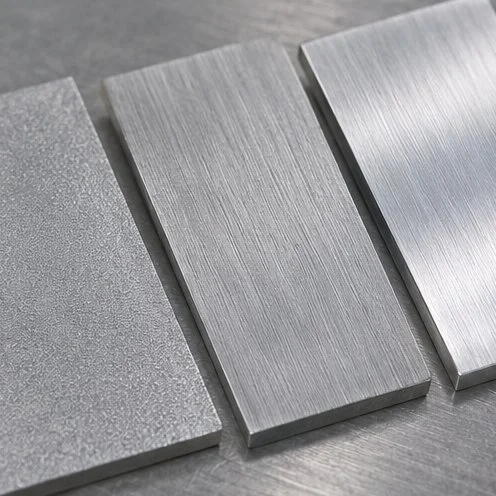
Grinding, brushing, abrasive blasting and polishing remove surface material by different mechanisms. Grinding can remove a local defect or establish a dimension, while blasting can produce a distributed profile suited to a later coating in some applications. Tool selection influences both appearance and the surface texture on which the coating will grow.
Media and tools can transfer material to the surface. For example, abrasive equipment shared between carbon steel and stainless steel can introduce iron contamination onto stainless parts. Segregated tools and clean workholding help retain the intended surface condition, especially when subsequent treatment includes passivation.
Check edges and thin features before specifying an aggressive abrasive step. An edge can round over, a sealing face can acquire a directional scratch, and threads can hold loose media. Mark areas that require protection and establish how inspection will detect changed dimensions or embedded contamination before coating.
Oxide removal and activation
Cleanliness and chemical activity describe different conditions. A part may be free of oil but still covered by an oxide that reduces adherence of a metallic deposit. An appropriately selected conditioning or activation stage addresses this surface state after the earlier soils and debris have been removed.
Pickling and descaling can remove substantial oxide where the material and specification permit. Their effect on surface condition and dimensions can differ from a brief activation step immediately before plating. Stainless weld heat tint, aluminum's rapidly re-forming oxide and the surface of a copper alloy illustrate why the preparatory routes cannot be treated as interchangeable.
The interval between activation and coating can be important, particularly where a new oxide forms quickly or where wet parts are exposed to air. Control the order of operations and the transfer, and confirm what to do if the line stops with parts between stages. A repeatable recovery procedure prevents work from reaching the next stage with an unknown surface condition.
Rinsing and evidence of readiness
Rinses remove dissolved cleaner and loosened contamination so they do not travel into later baths. Rinse quality depends on the amount carried over, part orientation, water supply and the arrangement of stages. Evaluate hard-to-drain geometries under normal rack loads, because a shallow pocket can carry more liquid than an exposed flat face.
A water-break observation can sometimes reveal residues that cause water to retract rather than wet evenly. It provides limited evidence about trapped contamination, invisible ionic residues or a cured film that behaves differently from oil. The acceptance plan can combine practical observations with process monitoring and later coating adhesion evidence as appropriate for the application.
Document the incoming alloy, permissible preparation marks, surfaces that need masking and the condition required immediately before finishing. Include conditions such as the maximum time parts may sit between stages where they are important to the outcome. The quality control guide explains how to connect those records with defect investigation after coating.
A production trial using representative parts helps determine if the route works when soils, loading and storage reflect the normal job. The most useful result is a preparation sequence that repeatedly delivers the required condition, with agreed checks that can reveal drift before expensive downstream operations begin.
On a line handling both freshly machined and previously stored components, consider whether the same initial cleaning step gives both groups adequate preparation. Hold separate samples through a trial and compare the significant surfaces after coating. The resulting differences can reveal a storage condition that deserves its own incoming acceptance limit.