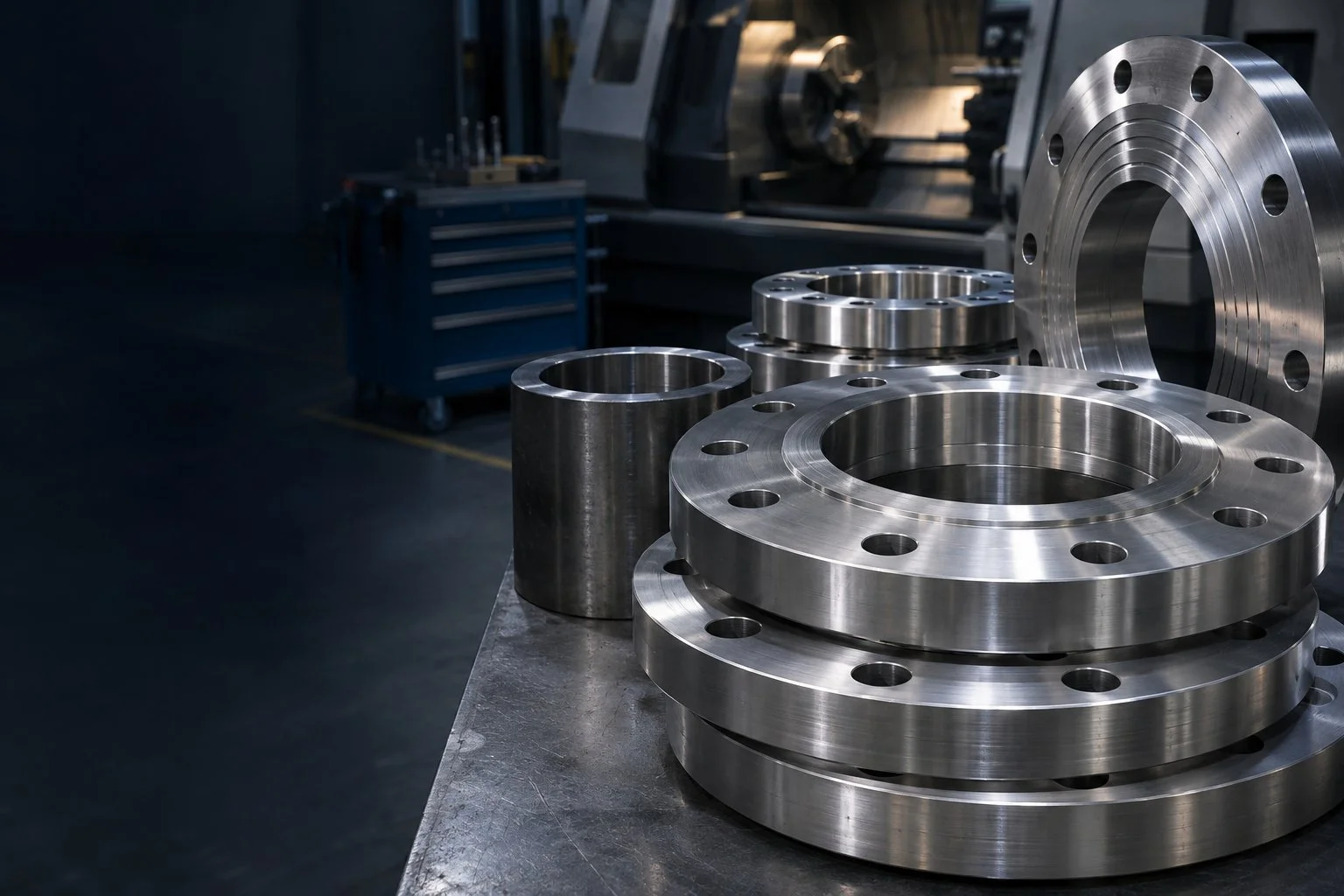
Machined stainless steel flanges and precision rings on an industrial workbench

Independent technical reference

Industrial Metal Finishing & Precision Surface Treatment

Explore metal plating processes, surface treatment technologies, and finishing methods used in modern industrial manufacturing.

The fundamentals

Introduction to Industrial Metal Finishing

Metal finishing changes the outer surface of a component to give it a particular role in service. A contact may need a stable conducting interface, while a valve body needs to withstand cleaning and keep its dimensions at a seal. The finishing route depends on the base metal, the geometry and the conditions the part will encounter after assembly.

A finish can add material, remove it or change the chemistry of the existing surface. Electroplating deposits a metallic layer, while mechanical preparation can alter the profile and chemical passivation can remove contamination from stainless steel. The industrial metal finishing fundamentals guide explains how to combine these operations in a process route.

The order also matters. Cleaning before treatment, rinsing between wet stages and protecting the finished part after drying help maintain the intended surface. Defining the final condition on the drawing gives the designer, finisher and inspector a shared way to discuss performance.

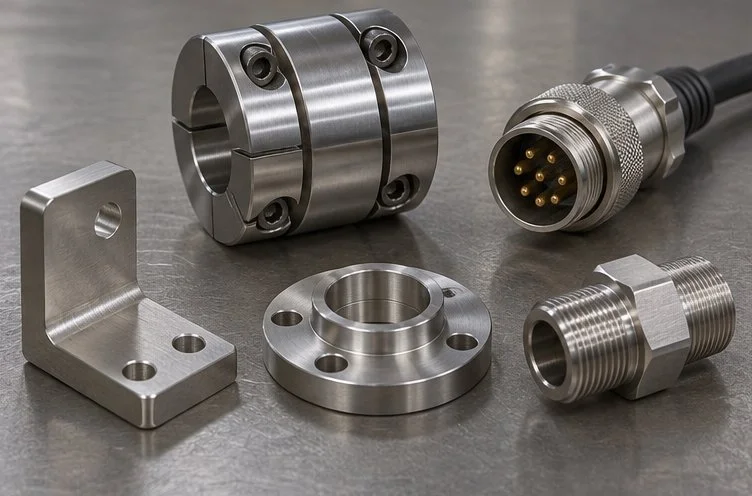
Machined steel couplings and a metal connector on a workbench
Illustrative precision metal components.

Key metal finishing processes

Three ways to engineer contact surfaces, targeted deposits and stainless steel components.

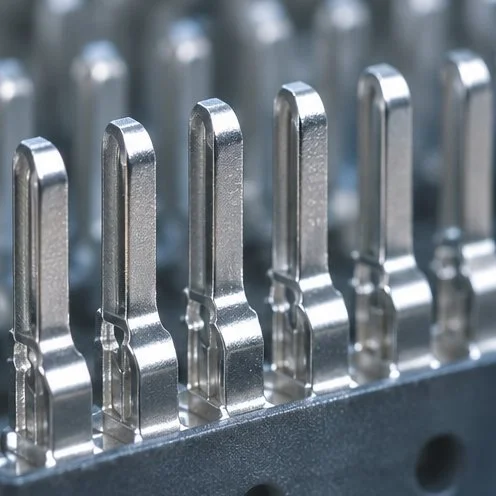
Close view of rows of silver-finished electrical contact pins

Silver plating

Silver plating provides a conductive surface for selected electrical contacts, connectors and power distribution components. Engineers may also choose it for solderability or specific loaded surfaces, depending on how the parts mate and wear. A useful specification identifies the substrate, underplate where applicable, thickness at significant surfaces and the test used to accept the result.
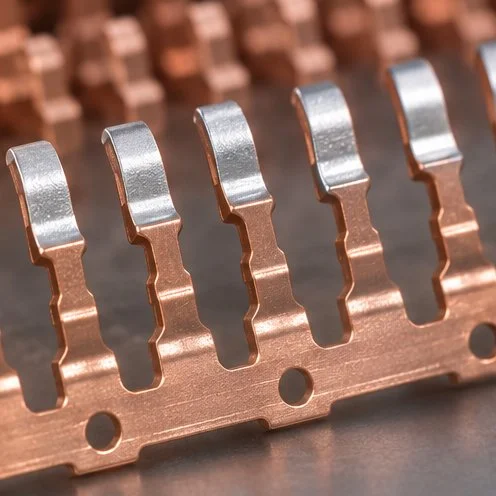
Metal terminals with a narrow silver-colored contact zone

Selective plating

Selective plating places metal only where the part needs it, such as a contact band or the inside of a fitting. It can protect surrounding dimensions or limit how much coating metal a part uses. Control depends on the tool or mask and on an inspection plan that checks both coverage and the edges of the deposit.

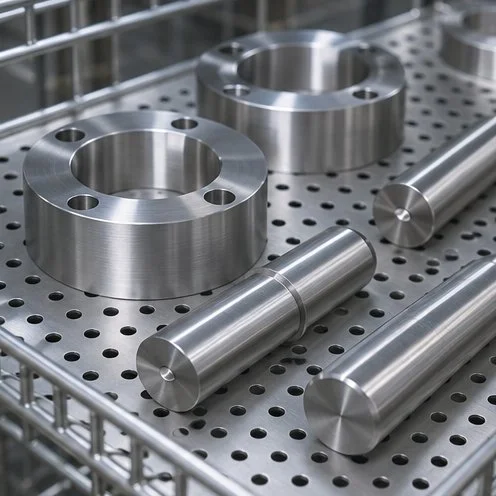
Brushed stainless-steel components arranged on a perforated rack

Passivation

Chemical passivation helps remove free iron from suitably prepared stainless steel and supports the alloy’s naturally passive surface. Cleaning and descaling can be separate operations, especially after welding or other fabrication that changes the surface. Choose the treatment and verification method for the grade, geometry and requirements of the finished component.

Metal Surface Preparation

A coating can only perform as intended when the surface beneath it is suitable. Oil and polishing compounds can affect wetting, while oxide and embedded particles can interfere with adhesion. The guide to common surface preparation methods explains how cleaning, abrasive preparation and activation address different conditions.

Texture has a role alongside cleanliness. A seal track, painted panel and electrical contact can each require a different surface profile or direction of machining marks. Specify where the profile will be measured and whether the requirement applies before or after treatment, especially when the finish changes dimensions.

Industrial Applications

The same category of process can serve several industries through quite different part requirements. Power equipment uses plated surfaces at selected current-transfer interfaces, while instrument and equipment manufacturers may use stainless steel and appropriate treatments where components face repeated handling or cleaning. Fluid-control parts add geometric constraints, including internal bores and sealing faces that can be hard to reach or measure.

Manufacturing volume changes the way some finishes are applied. Racks let each part be supported and oriented, while barrel processing can handle appropriate smaller parts in batches. Prototypes and samples are most useful when they use representative tooling and make it possible to evaluate the actual function as well as the appearance.

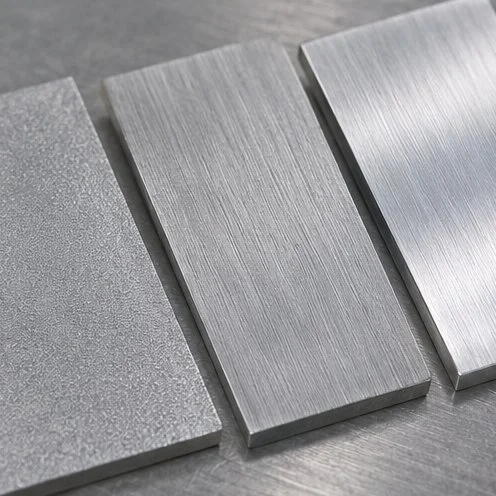
Metal test coupons showing different abrasive finishes
Examples of prepared metal surfaces and their textures.

Surface Quality and Corrosion Resistance

A clean, uniform appearance is one useful observation. It needs to be considered alongside thickness, adhesion, coverage and any applicable functional tests. A change in geometry or tooling can affect each of these characteristics differently, so a production drawing should mark the surfaces that drive acceptance.

Corrosion resistance also depends on the joint and its environment. Drainage, trapped moisture, cleaning chemicals and contact with dissimilar metals can make one corner of an assembly behave very differently from its exposed face. The corrosion resistance guide considers these conditions and explains what accelerated testing can establish.

Inspection should connect results with the specified requirement. For example, a flat coupon can help track a stable process, while a section through a critical recess can provide direct evidence about an area the coupon does not represent. Plan inspections during development so that inaccessible features can be checked before production release.

Metal Finishing Process Considerations

Start with the part’s intended use, substrate and tolerance requirements. Identify where marks are permitted, what needs protection, and whether joining or machining follows finishing. A short discussion of these details early in design can prevent a coating from interfering with fit or a masking boundary from crossing a functional surface.

Compare finishing options on the completed route. The cost and service life depend on preparation, handling, rejects, inspection and environmental controls as well as the coating itself. A process that offers appealing properties on a sample is a viable production choice when actual parts show consistent results at significant features.

When moving from sample approval to production, document the measurements that matter and the conditions under which they were made. Review process changes, packaging and maintenance assumptions when they could alter the surface in service. The technical guides below address how to make those decisions for specific finishes and operating conditions.

Technical guides

Explore finishing methods, process selection and production checks by topic.